John Newton on Our Weakness, Part 2

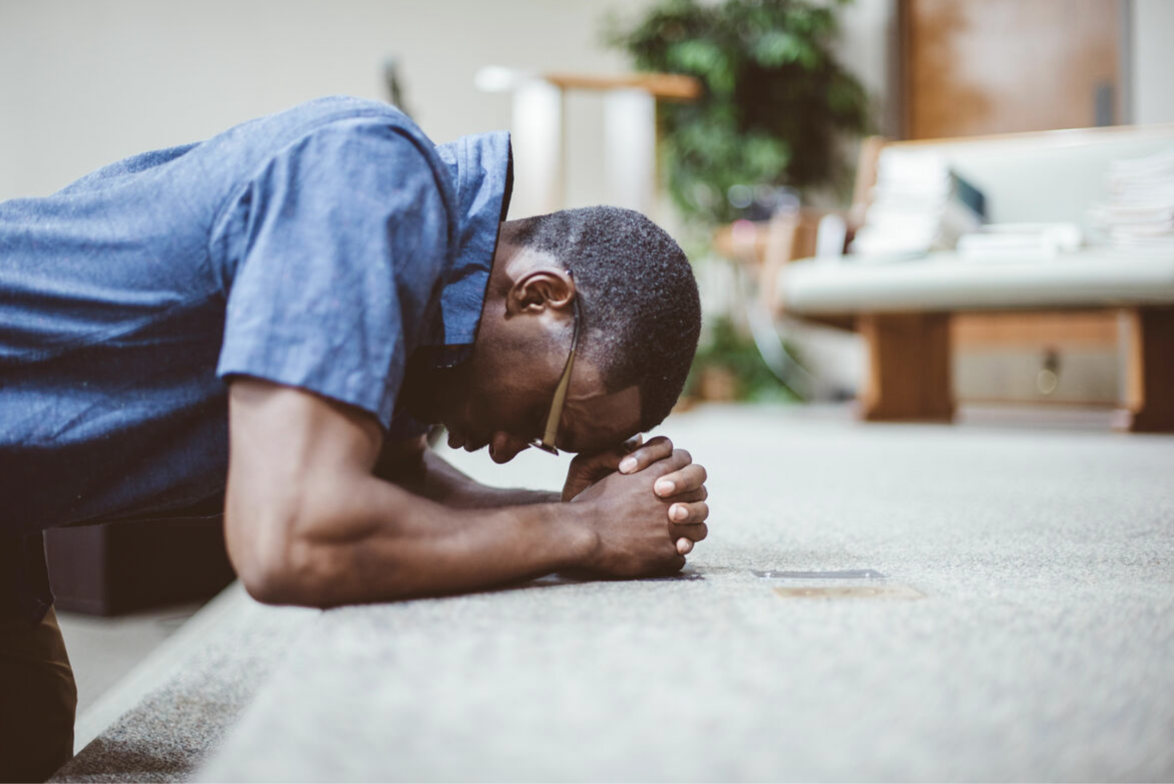
Like many of us, John Newton wrestled with the gap between what he desired to be and do, because of his faith, and what he actually saw in his life. And then he wondered, why wouldn’t God just remove those struggles, so I could live in continual victory?
“How can these things be, or why are they permitted? Since the Lord hates sin, teaches his people to hate it and cry against it, and has promised to hear their prayers, how is it that they go thus burdened? Surely if he could not or would not overrule evil for good, he would not permit it to continue.”
In the end, Newton discerns six clear reasons that God allows our weakness to remain.
1.Newton realizes that God uses his struggles to show him his own heart.
“By these exercises he teaches us more truly to know and feel the utter depravity and corruption of our whole nature, that we are indeed defiled in every part.”
2.As he is confronted with the reality of his own depravity, Newton finds himself driven to depend on God’s grace.
“His method of salvation is likewise hereby exceedingly endeared to us; we see that it is and must be of grace, wholly of grace; and that the Lord Jesus Christ, and his perfect righteousness, is and must be our all in all.”
Newton acknowledges that believers “would not have known so much of him (Christ), if they had not known so much of themselves.”
3.Like the Apostle Paul, John Newton sees that his weakness reveals God’s power.
“His power, likewise, in maintaining his own work, notwithstanding our infirmities, temptations, and enemies, is hereby displayed in the clearest light—his strength is manifested in our weakness.”
When we excuse, explain, or apologize for our weakness to ourselves or others, our deep desire is to show them we aren't weak. What they need to see is that God is strong!
4.Incredibly, Newton even sees his weakness used to thwart Satan.
“Satan, likewise, is more remarkably disappointed and put to shame, when he finds bounds set to his rage and policy, beyond which he cannot pass; and that those in whom he finds so much to work upon, and over whom he so often prevails for a season, escape at last out of his hands. He casts them down, but they are raised again; he wounds them, but they are healed; he obtains his desire to sift them as wheat, but the prayer of their great Advocate prevails for the maintenance of their faith.”
5.Newton notices that the weakness of believers increases their compassion for others.
“Further, by what believers feel in themselves they learn by degrees how to warn, pity, and bear with others. A soft, patient, and compassionate spirit, and a readiness and skill in comforting those who are cast down, is not perhaps attainable in any other way.”
6.As we tire of our struggles to be holy, Newton believes we are prepared by God for the end of our lives.
“And lastly, I believe nothing more habitually reconciles a child of God to the thought of death, than the wearisomeness of this warfare.”
[In the next blog, we’ll look more closely at how our weaknesses glorify Christ.]
Read more at: John Newton, Cardiphonia, Letters to a Nobleman, Letter 2 (1781).